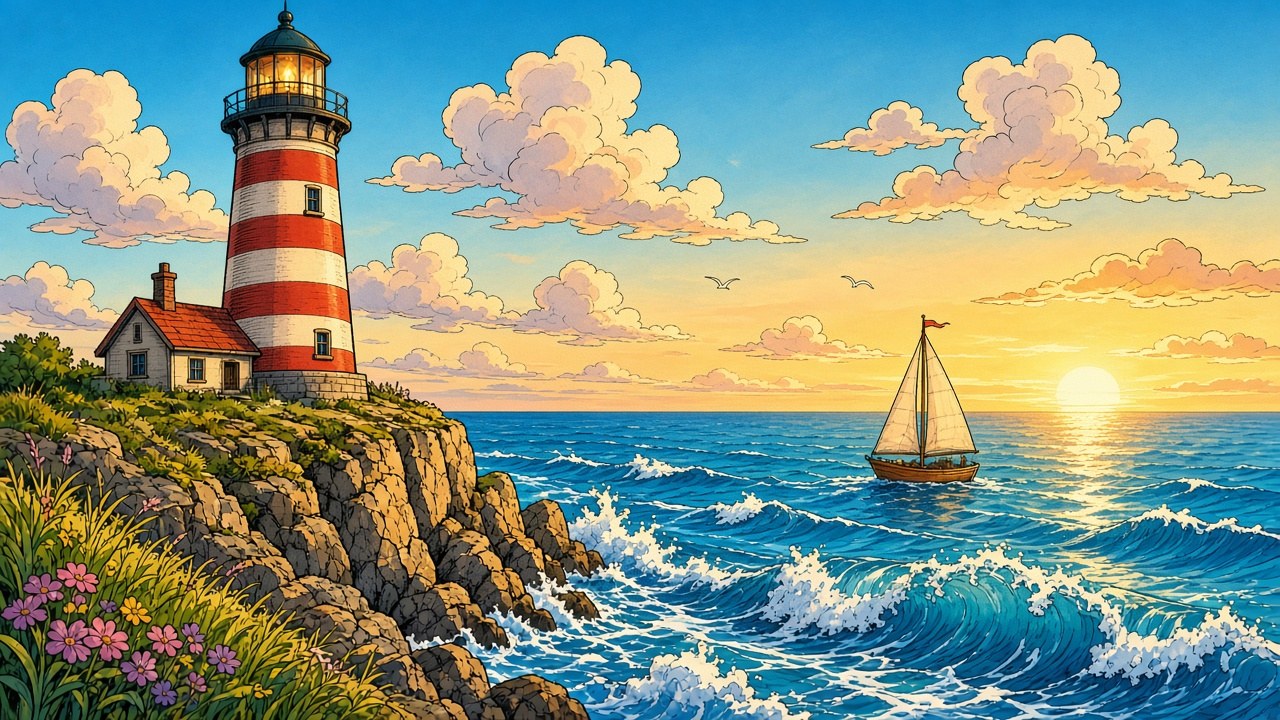
Lighthouses look like stubborn candles that refused to stay indoors. They stand on cliffs, sandbars, and lonely rocks, blinking the same polite warning night after night: “rocks here, ambition elsewhere.” For sightseeing, that stubbornness is half the charm.
Why They Exist (Besides Drama)
Before GPS and glowing phone maps, sailors needed a fixed signal that said “you are here” and “please do not become a shipwreck souvenir.” A lighthouse is basically a tall night-light with a résumé. The light pattern — the flash rhythm — works like a Morse signature, so captains can tell one tower from another even in fog and bad moods.
Many were built where the scenery is gorgeous and the weather is opinionated. That combination is why travelers love them and why keepers once needed heroic levels of patience.
What You Actually See Up Close
From a distance: a postcard. Up close: stairs. Lots of stairs. Spiral staircases, thick walls, salt-scarred paint, and windows that frame the sea like a slow movie. Some towers still feel industrial; others look like white wedding cakes that somehow got a coast guard job.
The lantern room at the top is the celebrity floor. Even when the original lamp is gone, the circular glass and 360-degree view deliver the classic “I am briefly in a novel” feeling.
Coastal Sightseeing Done Right
Lighthouse visits reward unhurried travelers. Walk the headland path, listen to gulls argue about nothing, and watch the horizon redraw itself every few minutes. Photographers chase the hour when the tower turns gold; families chase the gift shop magnet; everyone chases that quiet moment when the wind sounds louder than your notifications.
Pair a lighthouse with a cliff path, a harbor café, or a short ferry hop and you have an easy half-day that feels bigger than the map suggests.
Myths, Foghorns, and Mild Heroics
Stories cling to these towers: storms, keepers, ghostly footsteps that were probably just the building settling. Foghorns add comedy — a romantic silhouette interrupted by a sound like a lonely trombone. Modern automation replaced many keepers, but the romance stayed, because a lonely light still looks like hope with architecture.
Final Thoughts
If lanasky.com is sightseeing with a smile, lighthouses belong on the shortlist. They turn coastline into theater, make “caution” look beautiful, and prove that the best landmarks are the ones that keep working after the tourists go home — blinking calmly, as if the whole ocean still needs a night-light.
About the Author